Wednesday, 17 July 2013

NB Nature Camp

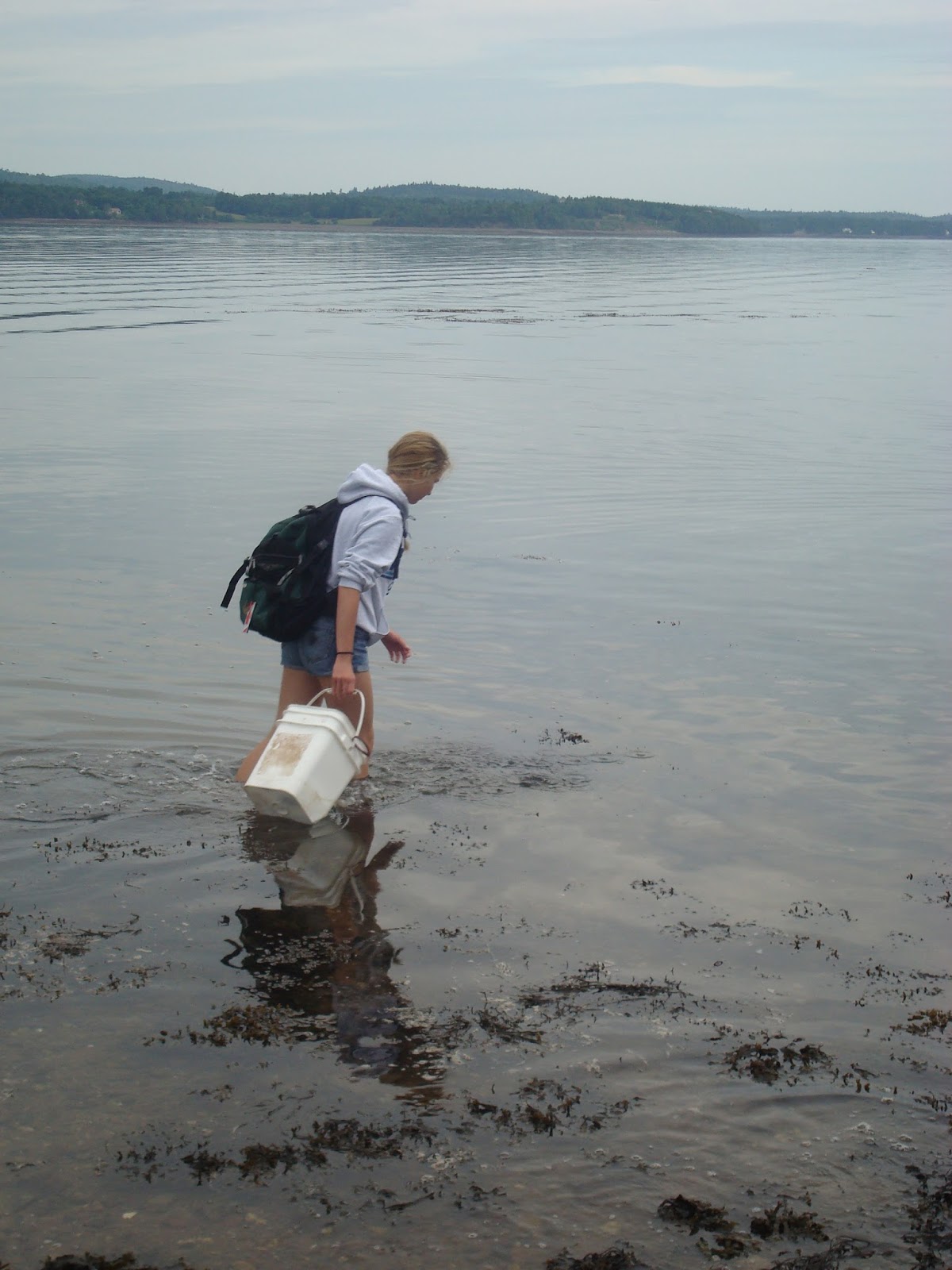
Last Thursday the New Brunswick Nature Camp took part in a number of activities at the Huntsman. Their first task was to mark the invasive species, Green Crab at Pottery Creek.  The students with the NB Nature Camp were trying to beat the number of crabs marked by the Introduction to Marine Biology students from earlier in the week.  Despite the fog the students found a record number of the crabs and captured, marked and released 144 crabs!  They more than doubled the total of the previous group.  In the afternoon the NB Nature Camp students boarded the Fundy Spray to take a closer look at the animals that live subtidaly in the bay.  They finished off the afternoon with a tour of the Fundy Discovery Centre.
The campers hit the beach in search of Green Crabs.

Even through the fog they were all eager to beat the record.

Just one of the many crabs found on the beach that morning.

On the Fundy Spray, Moon Jelly spotting.

Our catch from the scallop drag.

The students could not wait to dig in.

Enjoying the view as the fog starts to clear.

Group photo time.

The campers start the tour with a viewing of a film on the local Bay of Fundy tides.

Thursday, 11 July 2013

Plankton Day Camp

Students who took part in Wednesday's Plankton Camp began the morning with a closer look at the various types of plankton through the microscope. While playing Plankton Bingo the students learnt which type of plankton were plants and which ones were animals. A Plankton sun-catcher craft came next to learn about why plankton need sunlight. Students also took time out of the camp to attend the seal feeding and have a quick explore of the touch pool.  In the afternoon the full day students went outside to play a filter feeding game in which they would be marine animals trying to catch the plankton that they eat. Afterwards the students returned to the lab to construct a model plankton and play Plankton Wars! Whose plankton would stay near the top of the water column in order to allow for photosynthesis? After a few tweaks most everyone was able to design a 'plankton' that would neither float at the very top of the water, nor sink.

The touch pool is always popular.


It can be exciting to watch the seal feeding from below as well.

 Some examples of the sun-catchers made by the students.
 

Students pretended to be various filter feeding animals (or cowboys?) and tried to pop as many bubbles (plankton) as they could in the time allowed.

The plankton models are being assembled from many different materials.

Both models floated at the top with the majority under water. Way to go!


Intro. to Marine Biology cont.

On Tuesday the students in the Introduction to Marine Biology course began the morning at Holey Point exploring the intertidal zone and collecting specimens to study further in the lab later that morning. After lunch students performed a lab to investigate whether or not the size of an echinoderm affects how quickly it can right itself when turned over. The afternoon ended with a tour of the Fundy Discovery Centre.  In the evening it was time to learn more about the invasive species of the area.

On Wednesday the theme of invasive species was continued as students marked Green Crabs at
Pottery Creek.  After lunch fish were studied in more detail and the students toured the Atlantic Reference Centre to view their vast and varied collections.
Tracey explains what to look for and where to find it.

Some students stayed on the beach, others tested the waters.

You had to step carefully on the seaweed to avoid slipping.


Sea Urchins were found just past the low tide mark.

Here Tracey shows the difference between a Common Periwinkle and a Dogwinkle.

There are some interesting rock formations on the beach.


In the lab to try and identify the intertidal and subtidal species collected.

The lab binder was useful in identifying this Green Crab.

This student carefully examines his specimen.


It took a lot of patience to wait for some of these echinoderms to turn over.

Waiting for a seastar to flip.

The touchpool was a very popular part of the tour.
 

A nice slimy Moonsnail.

Look! Sponge!

Tuesday, 9 July 2013

Intro. to Marine Biology

On Monday students from all over Canada, as far away as Manitoba journeyed to the Huntsman to study Marine Biology.  Upon arrival students were given a quick orientation and then it was onto the boat to collect plankton, look at marine invertebrates from the scallop drag and then perform a fish trawl in order to measure and record the specimens found.

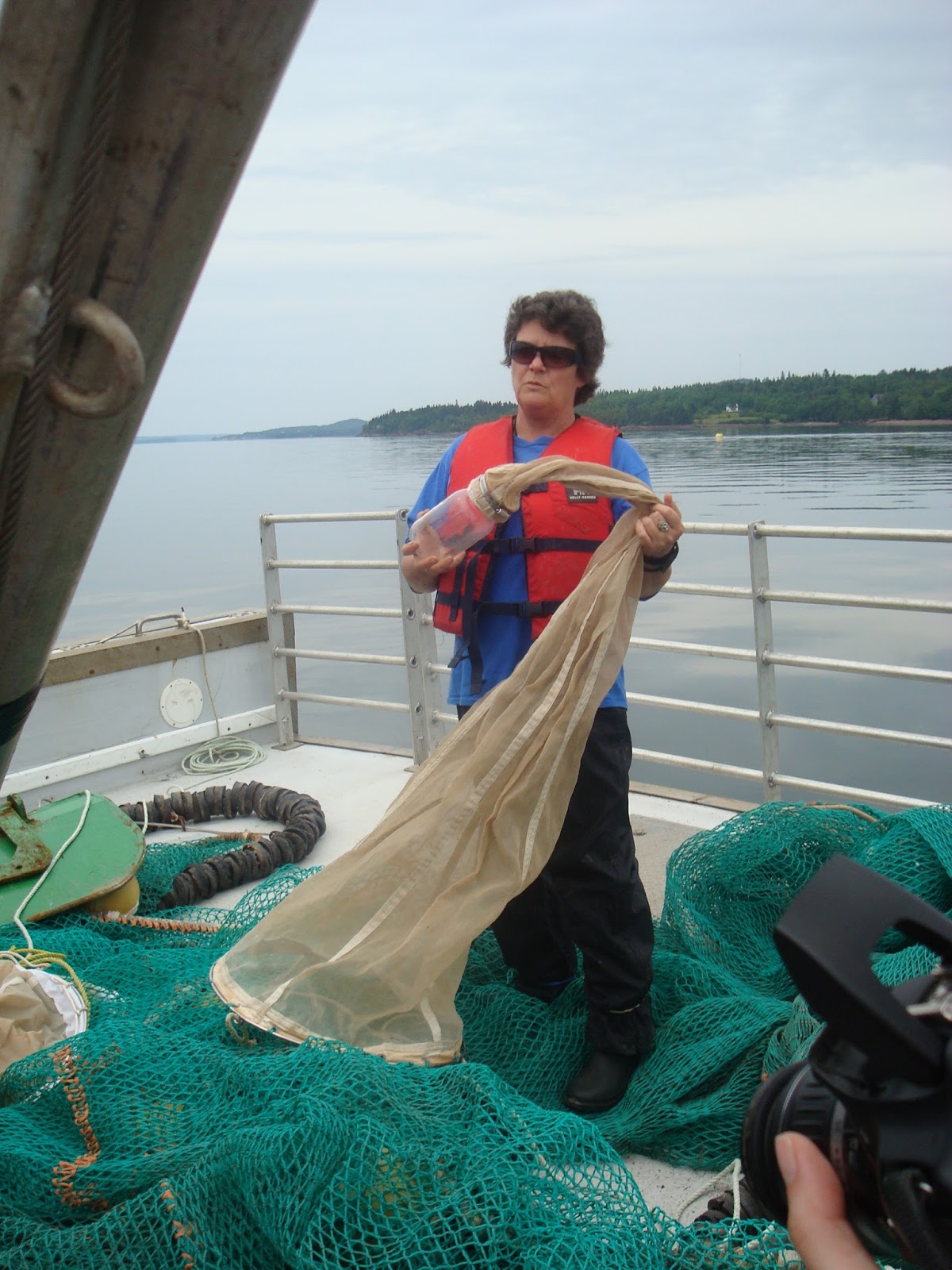
Here Tracey shows the net that is used to collect plankton from the water.

 
The net is lowered over the boat and then dragged for a few minutes before it is brought back on board and the plankton is stored in jars.

Here the students study the differences between the phyto(plant)plankton and the zoo(animal)plankton.

Our catch from the scallop drag.

A large rock crab!

Everyone digs in to have a look at all the invertebrates!

After looking at a chart of the area, we used a salinometer to measure the salinity of the water and then a secchi disk to measure the size of the water column.

The crew fills this large tank with water to store the fish in while we are measuring them.

A number of lobster were caught in our net; they were all released back into the water.

This female lobster is carrying many eggs.

Everyone wanted a turn holding a lobster.

This was a particularly large lobster found.

 
Skates were also very popular.

This skate was cradled very gently before being placed back in the water.

Some students were not as keen as others to hold the skates.

The long-horn Sculpin are sometimes known as 'growlers' because of the noise they make when grinding the plates at the back of their throat together.

Another 'growler.'

The gulls were very excited to see the rest of the catch go overboard as they hoped to snag some before it made its way to the bottom.


Tuesday, 2 July 2013

Boys and Girls Club Day 1

Today children from the St. Stephen Boys and Girls Club began their four day adventure into marine biology. In the morning they played Plankton Bingo and made Plankton Sun catchers. After a quick snack it was time to tour the aquarium and watch the seal feeding.  After lunch the campers learnt about the seabirds found in and around the Bay of Fundy region. They went on a scavenger hunt to learn fun facts about each and made a field guide to use as a reference later.  Afterwards it was time for some seabird games and then a film on the origins of life in the ocean.

Using a microscope the boys and girls are searching for various plankton that they can then identify on their Bingo card.

One of the plankton sun catchers!

Some of the campers thought it best to enjoy the seal show from inside.

A little rain does not stop the seals.

 
These girls are discovering an interesting fact about the Common Goldeneye. Did you know that the female bird sometimes uses the nests of other birds to lay her eggs in?